


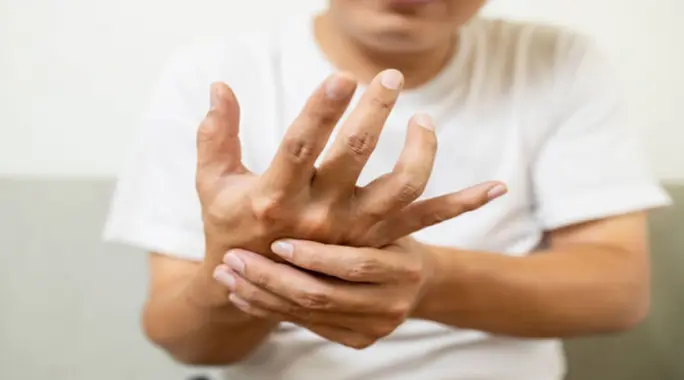
Clinodactyly, known in Arabic as مرض تقوس الأصابع, is a medical term for a digit that curves abnormally to one side. This congenital condition means a child is born with an affected finger or toe that bends or is crooked. While it most commonly affects the little finger (pinky), it can also appear in other digits.
An abnormally curved finger or toe might sometimes interfere with hand function or dexterity. The severity of the curve varies greatly, ranging from mild and barely noticeable to more pronounced. Interestingly, Clinodactyly often goes undetected for years if it's not severe, as it typically doesn't cause pain or significantly impair function. Treatment approaches depend on how severe the condition is, ranging from simple observation to surgical intervention.
Navigating this condition requires a clear understanding of its characteristics, potential causes, and available treatment pathways. This article will guide you through all the essential information about Clinodactyly.
Table of Contents
- What is Clinodactyly?
- Recognizing the Signs: Symptoms of Clinodactyly
- Understanding the Causes of Curved Digits
- How Clinodactyly is Diagnosed
- Treatment Options for Clinodactyly
- Conclusion
What is Clinodactyly?
Clinodactyly refers to an abnormal curvature of a digit, most frequently the little finger, causing it to bend towards the adjacent finger. This unique curvature stems from an abnormally shaped bone within the affected finger or toe. For instance, an irregular, wedge-shaped bone can cause the digit to grow at an angle.
This condition is notably more common in boys than in girls. While often isolated, meaning it occurs without other health issues, Clinodactyly can sometimes be associated with various genetic syndromes. It affects approximately one in four children born with Down syndrome, highlighting its connection to certain chromosomal conditions.
Recognizing the Signs: Symptoms of Clinodactyly
The symptoms of Clinodactyly are typically visible in the affected finger or toe and can be present from birth, even if not immediately obvious. While the condition primarily affects fingers, it can also manifest in the toes. As bones grow and mature during early childhood, the curvature may become more noticeable.
Key indicators of Clinodactyly include:
- The affected digit appears bent like a hook or a "C" shape, often at an angle greater than 10 degrees.
- The digit curves towards other fingers, with the pinky finger frequently pointing towards the ring finger.
- The bending often occurs between the joints of the finger.
- In some cases, the curved digit might interfere or overlap with neighboring fingers, potentially impacting grasping or fine motor skills.
- Importantly, most cases of Clinodactyly do not involve pain or swelling around the bend.
Understanding the Causes of Curved Digits
The underlying cause of Clinodactyly is congenital, meaning it is present at birth. This condition primarily results from an unusual growth pattern of one of the bones in the affected digit. Specifically, a problem with the growth plate of a finger or toe bone can lead to its abnormal, wedge-like shape, causing the digit to curve.
While the exact primary cause remains unclear in many instances, Clinodactyly is known to be associated with several genetic and health disorders. These include:
- Down syndrome (Trisomy 21)
- Klinefelter syndrome
- Turner syndrome
- Fanconi anemia
It is essential to understand that while these associations exist, many individuals with Clinodactyly do not have any other underlying health conditions.
How Clinodactyly is Diagnosed
Diagnosing Clinodactyly typically involves a straightforward process. Early and accurate diagnosis is crucial as it significantly helps in determining the most appropriate treatment path for the child.
The diagnostic steps usually include:
- Physical Examination: A healthcare provider will carefully examine the child's fingers and hands, observing the degree and direction of the curvature.
- X-ray Imaging: An X-ray is often performed to confirm the diagnosis. This imaging technique provides clear visibility of the bones in the hand or foot, allowing the doctor to identify any abnormally shaped bones or growth plate issues contributing to the curvature.
- Movement Tests: In some cases, tests assessing movement and dexterity may be conducted to evaluate whether the condition impacts the digit's function.
Treatment Options for Clinodactyly
The treatment approach for Clinodactyly depends entirely on the extent of the digit's curvature and whether it causes any functional problems. Many cases, especially those with mild curvature, do not cause pain or functional issues and therefore may not require surgical intervention, often only needing continuous observation.
However, if the curvature is significant and interferes with hand use or movement, surgery may be necessary. There are two primary types of surgical procedures for Clinodactyly:
Physiolysis for Younger Children
Physiolysis is typically performed on very young children who have a triangular-shaped bone causing their digits to grow with an increased curve. During this procedure, the abnormal growth plate is carefully removed. The goal is to allow the digit to grow more naturally and straighten over time as the child develops.
Osteotomy for Severe Curves
Osteotomy is generally reserved for younger children with more severe curves, as well as older children and teenagers whose curved bones significantly impair hand function. This surgery involves cutting and reshaping the curved bone to straighten it. Post-surgery, the bone is commonly stabilized in its corrected position using pins and a splint until it fully heals.
Conclusion
Clinodactyly is a congenital condition characterized by an abnormal curvature of a finger or toe, most often the pinky finger. While frequently mild and asymptomatic, its severity varies, sometimes requiring intervention if it affects function.
Understanding the characteristic symptoms, potential genetic associations, and the diagnostic process involving physical exams and X-rays is key. Treatment ranges from observation for mild cases to surgical options like physilysis or osteotomy for more pronounced curvatures. Consulting with a healthcare professional can ensure a proper diagnosis and the most suitable management plan for individuals affected by Clinodactyly.