
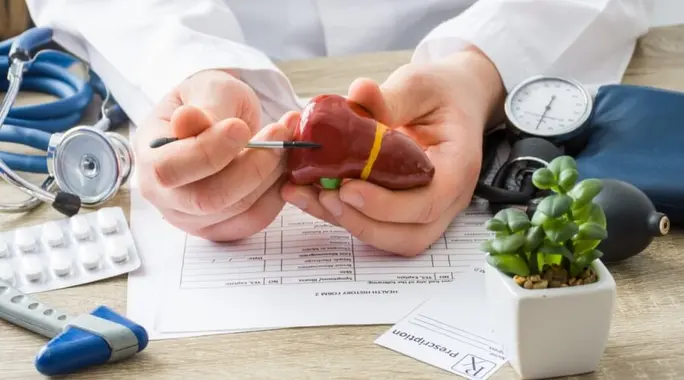
The liver is a vital organ, tirelessly filtering toxins and supporting numerous bodily functions essential for life. But what happens when this crucial organ starts to scar? Liver fibrosis, the hardening of liver tissue, can raise serious concerns about its long-term impact on health. Many people wonder: هل تليف الكبد يسبب الوفاة؟ (Does liver fibrosis cause death?)
While fibrosis itself isn’t directly fatal in its early stages, its progression can lead to life-threatening complications. Understanding this condition, its stages, and its potential consequences is crucial for early intervention and better health outcomes.
- Understanding Liver Fibrosis
- The Progression of Liver Fibrosis
- Life-Threatening Complications of Advanced Liver Fibrosis
- Conclusion: Addressing the Risk
Understanding Liver Fibrosis
Liver fibrosis develops when the liver experiences repeated or chronic injury, often due to conditions like hepatitis, excessive alcohol consumption, or fatty liver disease. In response to this damage, the liver attempts to repair itself by producing scar tissue.
Initially, this scarring can be a protective mechanism. However, if the damage continues, the scar tissue accumulates, replacing healthy liver cells. This hinders the liver’s ability to perform its crucial functions, such as detoxification, protein synthesis, and bile production. While early-stage fibrosis may not cause noticeable symptoms, its advancement can significantly impair liver function.
The Progression of Liver Fibrosis
Liver fibrosis progresses through distinct stages, each reflecting the extent of scarring and damage to the liver tissue. Understanding these stages helps medical professionals assess the severity of the condition and plan appropriate management strategies.
Stage 1: No Fibrosis (F0)
At this initial stage, the liver shows signs of inflammation, but there is no evidence of cell death or significant scar tissue formation. The liver’s structure and function generally remain normal.
Stage 2: Mild Portal Fibrosis (F1)
In this mild stage, small clusters of scar tissue begin to form around the portal veins, which are critical for blood flow to the liver. Despite this, the liver typically continues to function well, and symptoms are often absent or subtle.
Stage 3: Moderate Periportal Fibrosis (F2)
Scarring becomes more widespread, extending from the portal areas into the surrounding liver tissue. At this point, the liver’s ability to perform all its functions optimally may start to diminish, although overt symptoms might still be mild.
Stage 4: Severe Bridging Fibrosis (F3)
This severe stage is characterized by significant scar tissue that forms “bridges” between different portal areas and central veins. These fibrous bridges impede proper blood flow through the liver and severely affect its functional capacity. Symptoms are more likely to appear at this stage.
Stage 5: Irreversible Liver Cirrhosis (F4)
Cirrhosis represents the most advanced and severe stage of liver disease. The liver becomes extensively scarred, hard, and nodular, leading to irreversible damage. At this point, the liver can no longer effectively perform its functions, leading to numerous life-threatening complications. This is the stage where the answer to هل تليف الكبد يسبب الوفاة؟ becomes critically relevant, as complications from cirrhosis can indeed be fatal.
Life-Threatening Complications of Advanced Liver Fibrosis
Once liver fibrosis progresses to cirrhosis, the risk of severe, life-threatening complications significantly increases. These complications directly answer the question of هل تليف الكبد يسبب الوفاة؟ by showing how the disease can lead to fatal outcomes.
Portal Hypertension
This is a common and serious complication where scar tissue obstructs blood flow through the liver, causing a dangerous increase in blood pressure within the portal vein system. This elevated pressure can lead to other severe issues.
Internal Bleeding (Varices)
Due to portal hypertension, blood reroutes into smaller, more fragile veins in the esophagus, stomach, and intestines. These enlarged veins, called varices, can rupture and bleed profusely, leading to life-threatening internal hemorrhages that require immediate medical attention.
Fluid Retention (Ascites and Edema)
Increased pressure in the portal system, combined with the liver’s inability to produce enough albumin (a critical protein), causes fluid to accumulate. This leads to swelling in the legs (edema) and the abdomen (ascites), which can be uncomfortable and prone to infection.
Hepatic Encephalopathy
When the severely damaged liver can no longer remove toxins from the blood, these harmful substances can build up and travel to the brain. This results in confusion, memory problems, altered personality, and in severe cases, stupor or coma.
Jaundice
The liver’s diminished capacity to process bilirubin, a waste product from red blood cell breakdown, leads to its accumulation in the blood. This causes the skin and whites of the eyes to turn yellow, and urine to appear dark.
Hypersplenism
Portal hypertension can cause the spleen to enlarge and become overactive, destroying blood cells (red blood cells, white blood cells, and platelets) too rapidly. This can lead to anemia, increased risk of infection, and bleeding problems.
Increased Risk of Liver Cancer
Individuals with advanced liver fibrosis, particularly those with cirrhosis, face a significantly elevated risk of developing hepatocellular carcinoma, the most common type of liver cancer. Regular screening is often recommended for these patients.
Conclusion: Addressing the Risk
While early stages of liver fibrosis are not directly fatal, the answer to هل تليف الكبد يسبب الوفاة؟ becomes a resounding yes when the disease progresses to cirrhosis. The severe and often irreversible complications arising from cirrhosis, such as internal bleeding, hepatic encephalopathy, and liver cancer, can indeed be life-threatening.
Understanding the progression of liver fibrosis and recognizing its potential for severe outcomes underscores the importance of early diagnosis, lifestyle modifications, and appropriate medical management to prevent its advancement and mitigate the risks to life.